How Do You Know if It's a Load Bearing Wall
Nosotros all know the significance of altering a abode'due south structural system.
Accidentally removing a load bearing wall can cause severe on-going issues for homes or other edifice structures!
Permit's go over how to tell if a wall is load bearing.
Earlier we bound in, we want to you to be aware that your urban center government volition well-nigh likely require y'all to have a structural engineering science inspection to determine if a wall is load begetting prior to removal.
This is because altering a home's structural system without a structural engineer'due south inspection or a lot of self study may be a meaning brusk or long-term problem of the "domino consequence".
Your home or edifice could get a house of cards!
Yikes!
Yet, understanding the basic concepts of load begetting walls volition allow you lot to budget and ask your structural engineer for feedback on your remodeling plans.
Here nosotros go.
one) What is a load begetting wall?
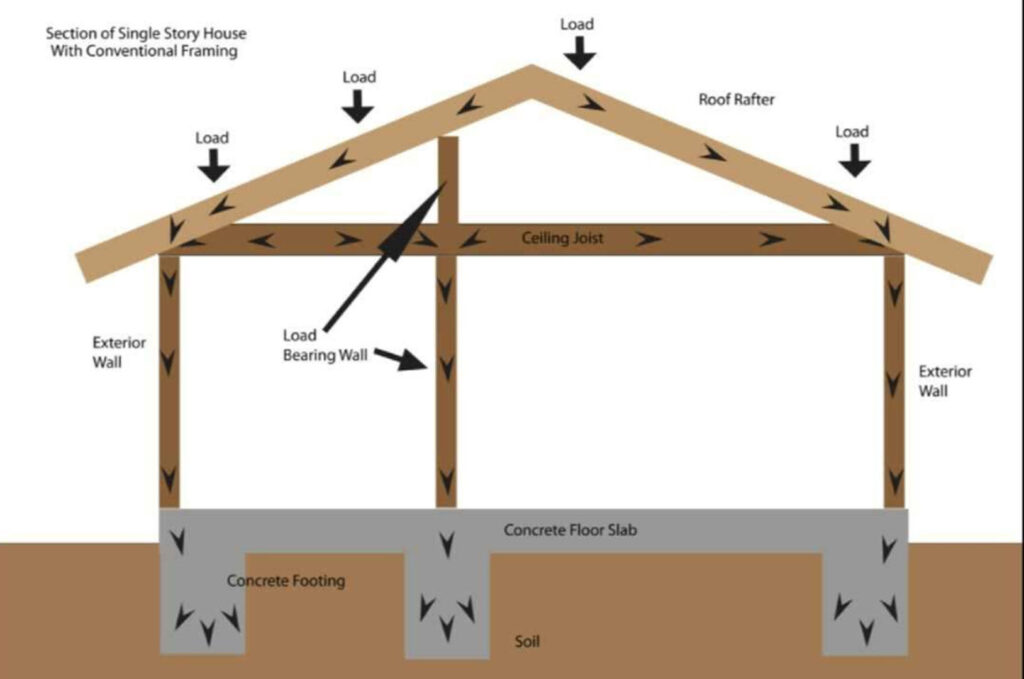
Load begetting walls are structural elements in the home that help to transfer weight from the roof, through the floors, and downwards to the foundation.
If y'all remove a load bearing wall without replacing it with the proper supports, you lot remove a vital part of the structural arrangement working to keep your dwelling continuing.
Since loads are transferred from 1 level of the dwelling house to the side by side, it is common to find load bearing walls directly over 1 another on each floor. Discover I said common, just not absolute.
2) Anatomy of a load begetting wall
Knowing what makes a wall load bearing is essential for locating them. Observe image 2 below. This wall has a base plate (a single ii×four or 2×vi), studs (unmarried 2×4 or two×6), and doubled up acme plate (2-2×4 or two×6).
At that place should be ii tops plates in order to support the flooring joists and forbid sagging and failure.
Floor joists (typically 2×6 up to two×12) are structural members used for transferring loads to vertical members.
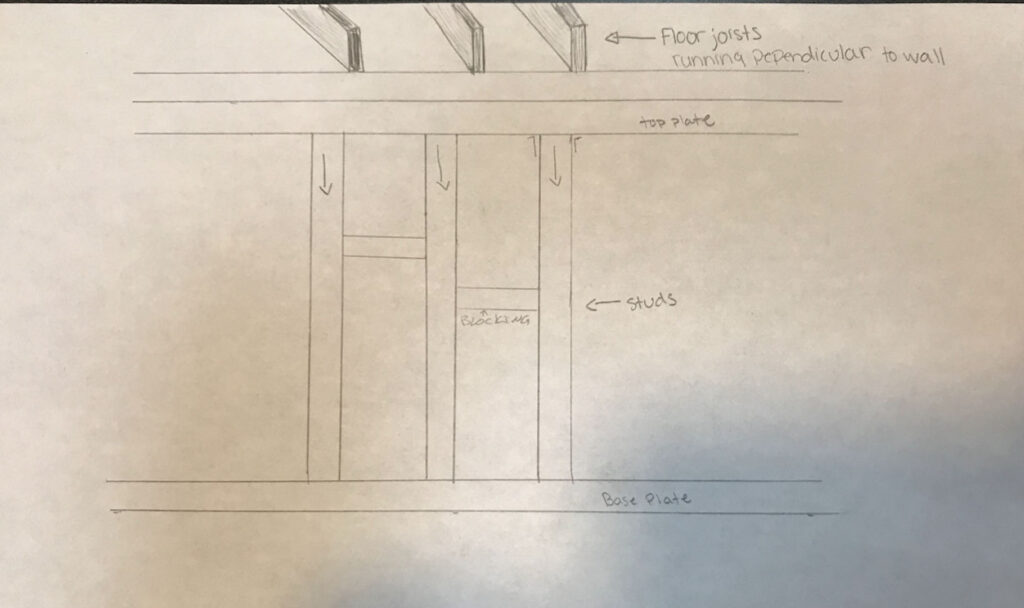
The floor joists in this detail photo are running perpendicular to the wall and cease on this wall which indicates that it is near likely load bearing.
If the joists were continuous over the top of the wall, depending on the loads to a higher place and beneath the wall, it could be not load bearing. A structural engineer would exist needed to determine this.
Here's a corking video to assist explicate anatomy.
3) What to Expect
Before we dive in and provide you with the steps required to become a full general sense of the load begetting walls in your domicile, we want to prepare you for what's to come up.
Be aware that most cities will require you lot to pull a allow for remodels, particularly if you lot plan to alter structural components.
Even if yous or a skilled contractor has feel determining load bearing walls, the city (in virtually every state of affairs) volition crave a structural engineer to sign off on the plans.

Although this may feel similar an obstacle stopping yous from progressing with your project, it's actually for a good reason.
For case, near people would look at image 2 and assume that because the joists run perpendicular to the wall and considering they finish on that wall, the wall is load bearing.
However, if a structural engineer looked at that sketch (prototype two) they would tell you, "information technology might be load bearing, but an onsite inspection to look at your attic, foundation, and your structure is a must."
There are no sure bets.
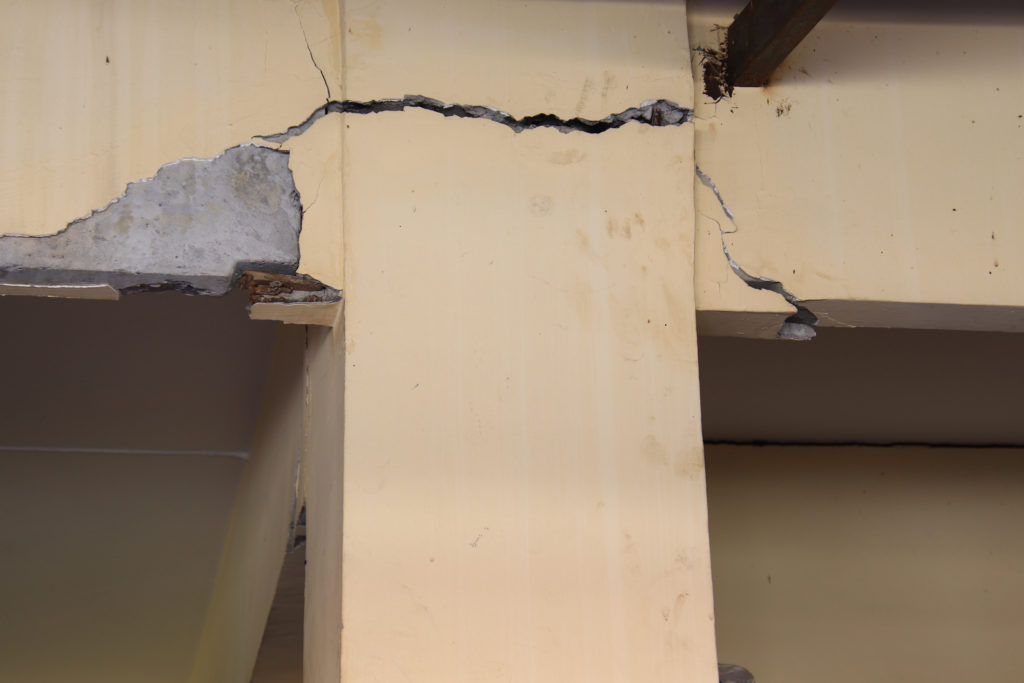
Opening up a wall can be like a pandora's box of anomalies!
Structural engineer'southward are trained to find things similar undersized members (building elements) which could hateful: 1) tons (literally) of deflection or "bounciness" or 2) understrength or bereft framing elements leading to structural failure or building collapse.
Structural Engineers can also provide y'all with documentation that your wall was inspected which can protect you lot.
If the wall is load bearing, many engineers volition provide you with a scope of work that your contractor tin can apply to perform structural alterations correctly and to come across required edifice codes.
4) Basic Steps to Determine Load Bearing Walls
A) Look at any given wall you retrieve y'all volition want to remove. If the drywall is open, this process will exist much easier.
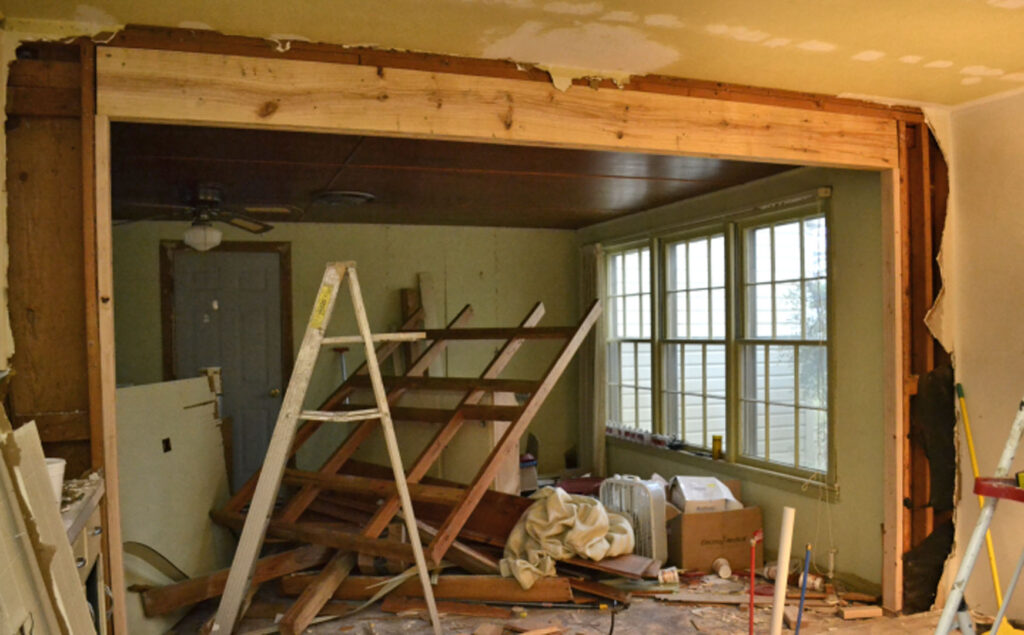
Y'all will demand to look at the flooring/ceiling joists. Detect how in the motion picture below the flooring joists are running perpendicular to the wall. This could mean the wall is load bearing, but is not enough information to say for certain.
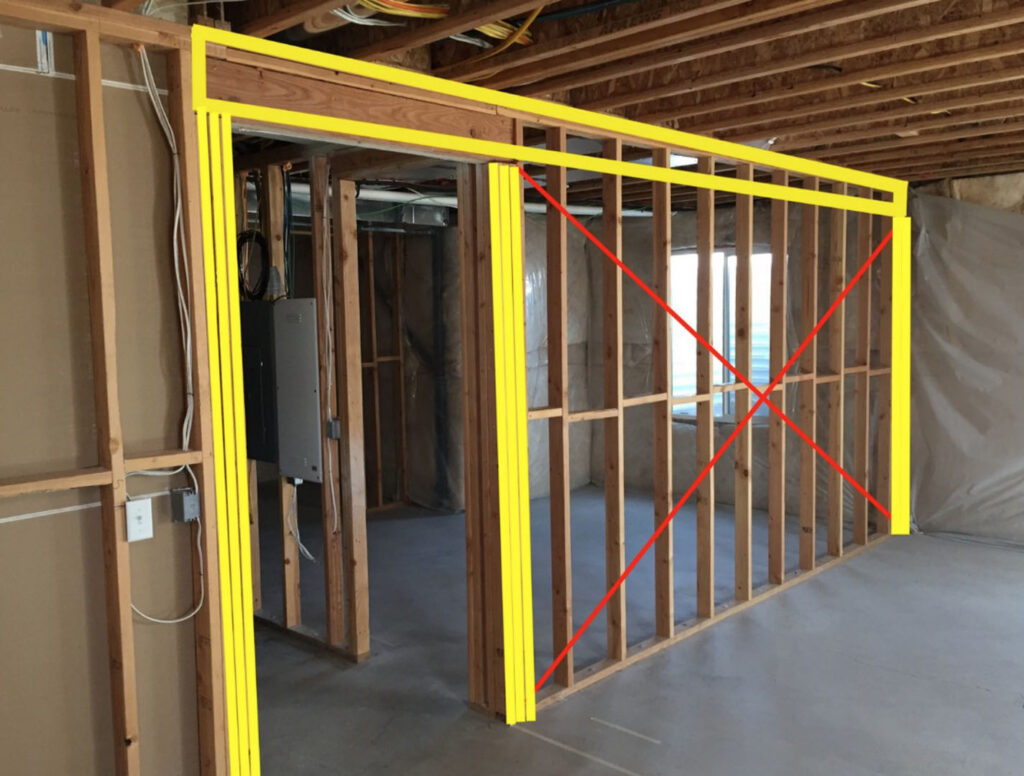
Source
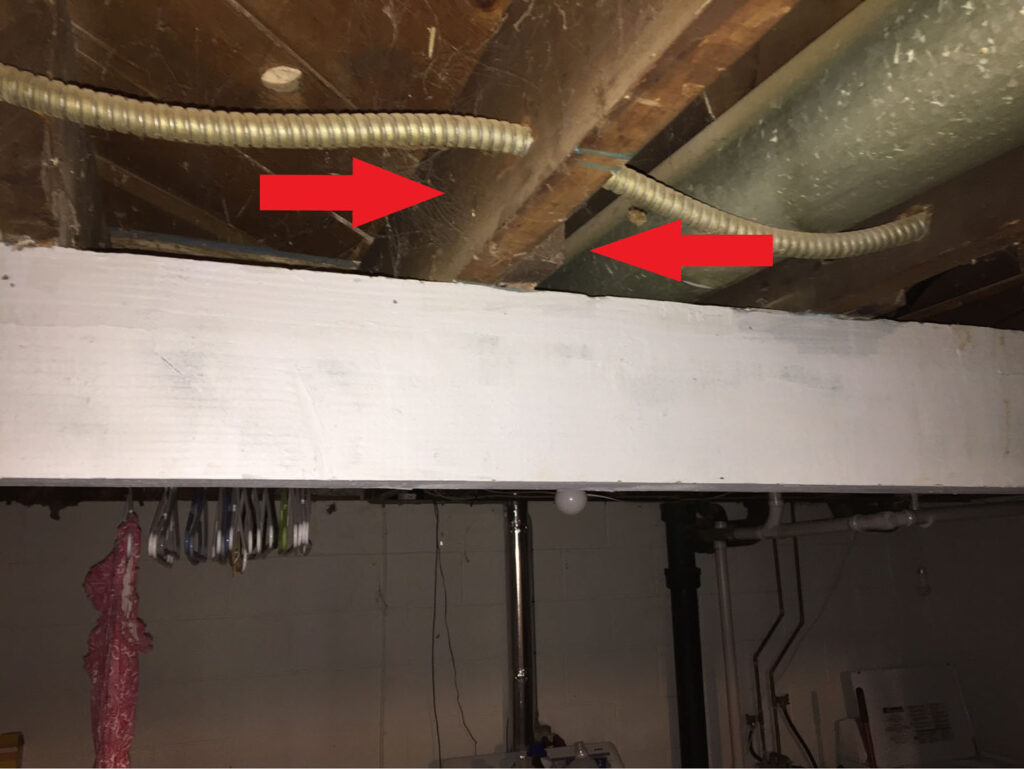
B) Side by side, follow the wall up through the levels of your dwelling house. Does the wall stretch upwards through the floor directly above itself? If then, this is another clue leading usa to believe the wall could be load bearing.
C) Caput to the cranium. Licensed Structural Engineer, Stephen Hammill, Complete Edifice Solutions says, "A lot of information technology comes downwards to where the roof rafters and trusses comport when determining what walls are load bearing." With that being said:
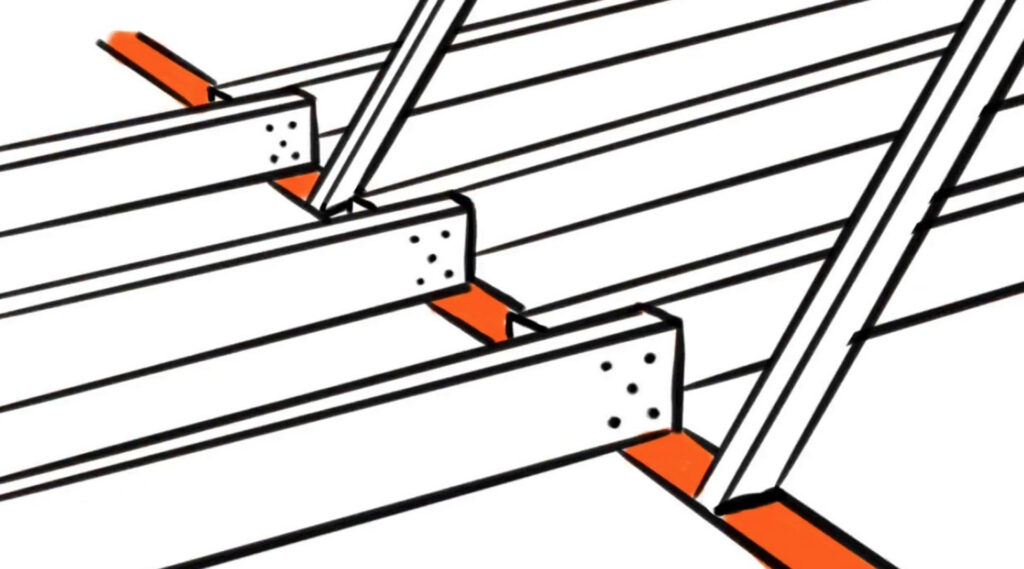
1) Do you notice ceiling joists stopping and starting perpendicularly over the wall? 2) Do you notice braces going from the rafters downwards onto the wall? If either of these scenarios are truthful, it's highly likely that y'all have a load bearing wall.
The picture below demonstrates ceiling joists resting on the wall too equally braces which transfer the load from the roof down to the wall.
five) The Myth about Exterior Walls:
Myth: All exterior walls are load bearing. Truth: It's common that all exterior walls in a home are load bearing, but not guaranteed.
Many people presume that all exterior walls are load bearing, menstruum. This is not always the example. Information technology comes down to where the floor joists and trusses bear which varies depending on the type and fashion of house.
Engineer, Stephen Hammill, P.E., drew us a simple sketch to explain.
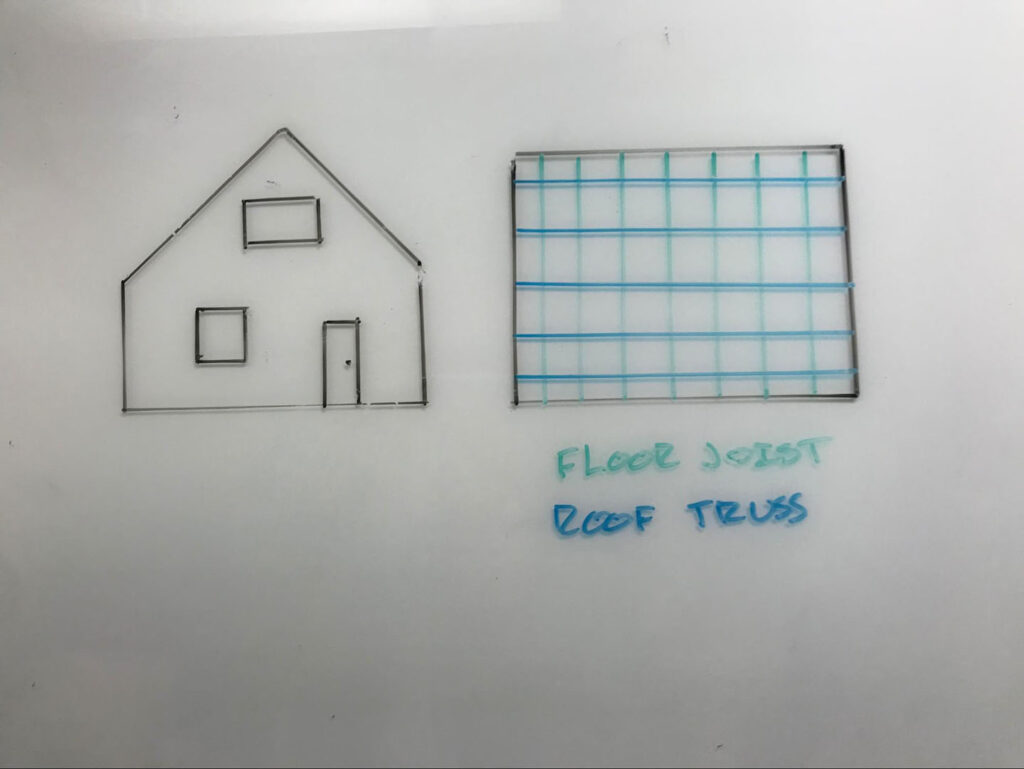
Image 9 depicts a business firm that has floor joists and roof trusses running perpendicular to each other (top view). They are rotated xc degrees which means the 4 exterior walls are all load bearing.
At present, await at the picture beneath. Do y'all notice a difference in how this house is congenital? Information technology'southward long and skinny comparable to some ranch homes. The roof trusses/rafters and floor joists/trusses are running parallel to each other.
This means that just the 2 walls the roof trusses/rafters and flooring joists/trusses are bearing on are load begetting.
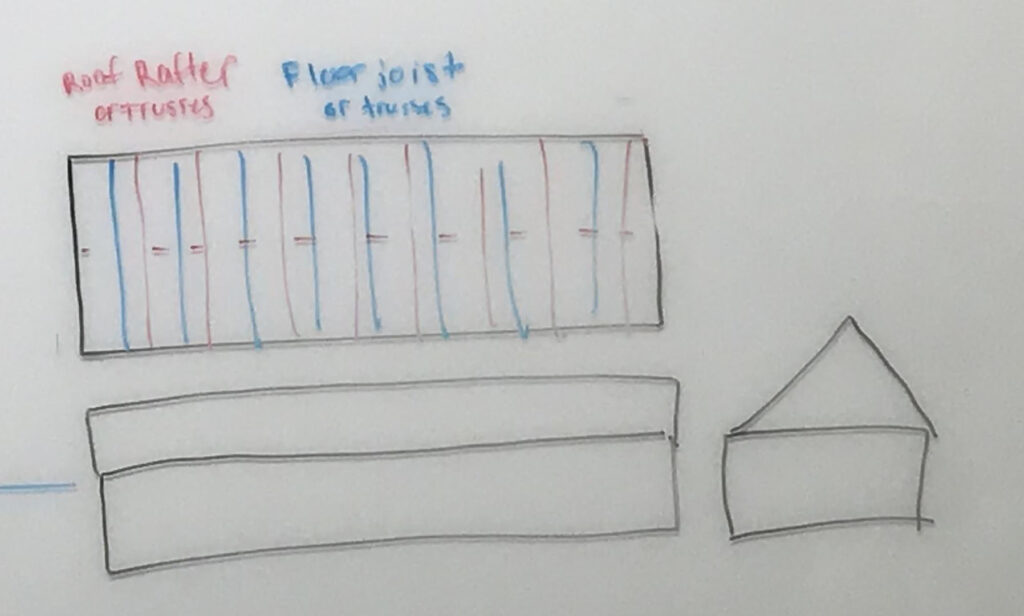
Aha! The myth is busted, outside walls can be non-load bearing.

6) 4 Factors Structural Engineers Consider when Engineering your New Support System
Past now you lot should have some idea nigh which walls are load bearing in your dwelling house. This may assistance you make very important decisions near your remodel.
Source
Go ahead and schedule your structural technology engagement. The engineer can await at the walls you want to remove and let you know A) Is it load bearing? B) What needs to happen if it is load begetting?
Remember, the structural engineer tin can wait for factors beyond what we listed in footstep 4. There may exist important hidden components of the abode which the engineer may want to analyze.
They may also discover a structural defect, such as an undersized beam, which could alter your remodeling plans. Added value…. While you take a structural engineer onsite, why not ask virtually other concerns like wall or foundation cracks, water intrusion or something else, just enquire!
Once they decide the wall is load begetting, a structural engineer volition consider several factors as they write the work scope for the replacement back up system.
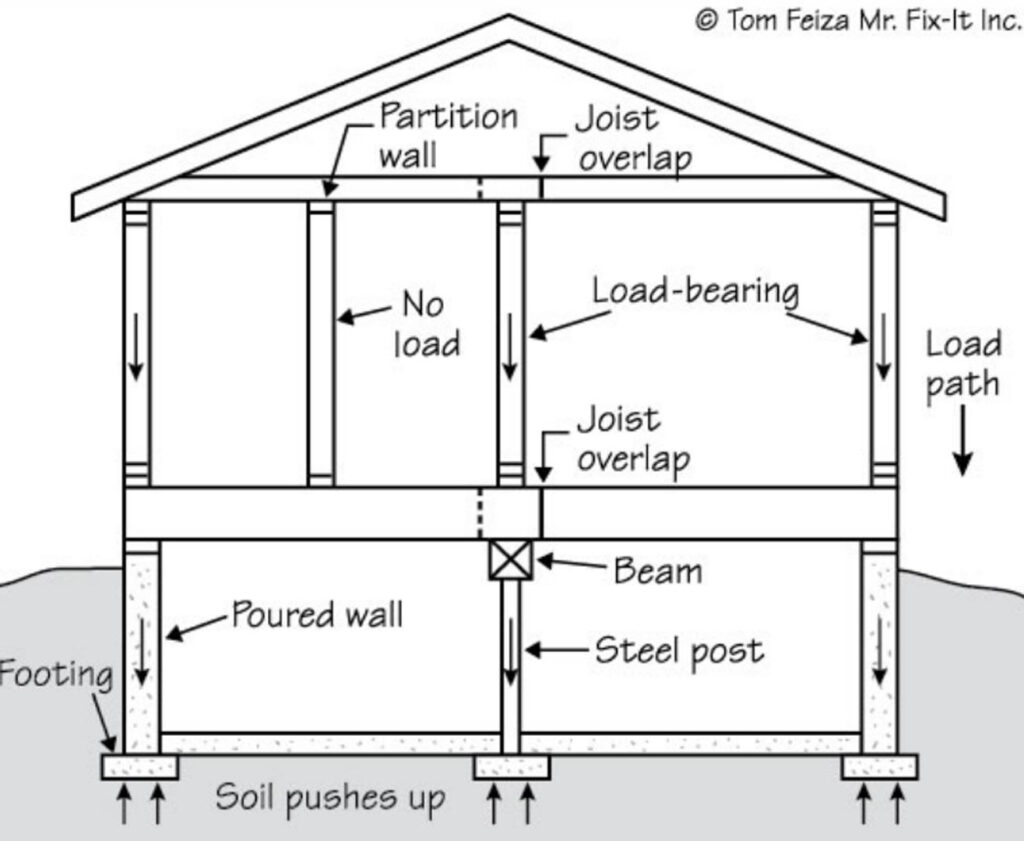
Load path:
Load path is the direction in which each consecutive load (structural weight) volition pass through connected members. How a load is distributed helps to determine if a wall is load bearing.
It too helps an engineer create new support systems once the wall is removed. Information technology tin be challenging to engineer solutions and lots of math calculations are required.
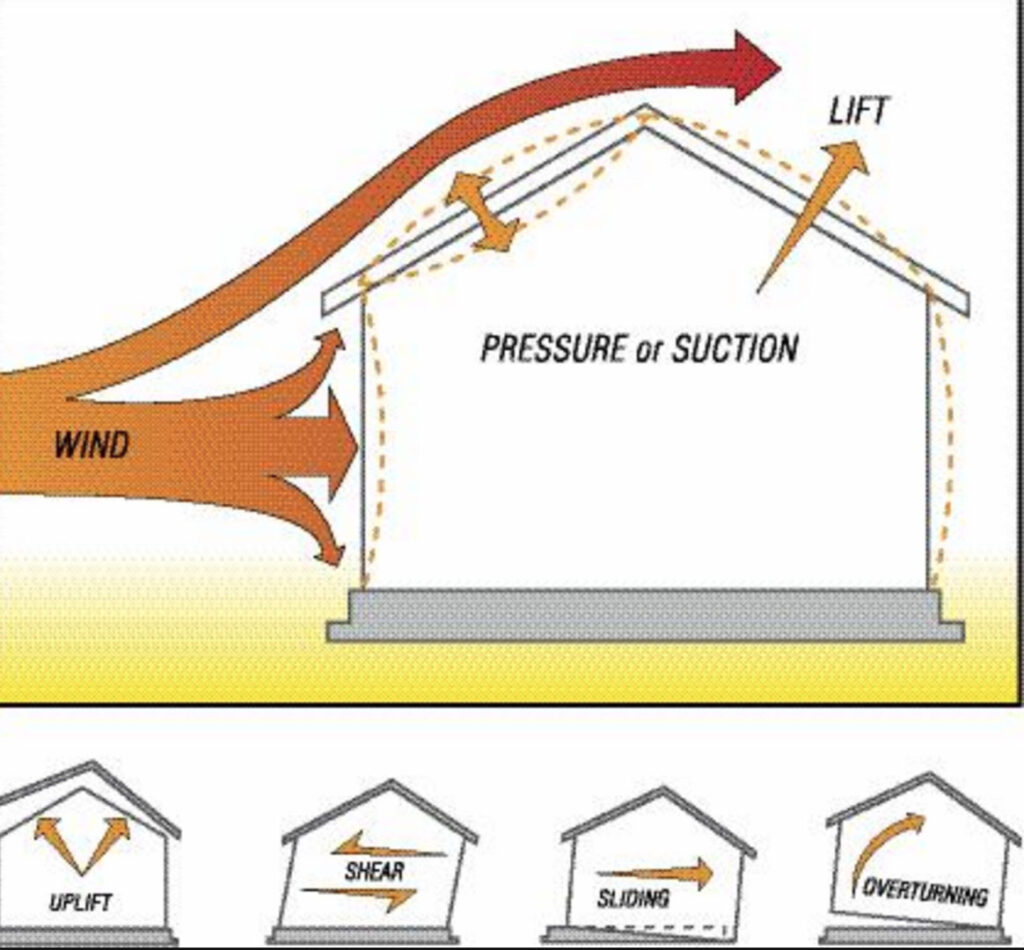
Uplift
An uplift force is whatsoever upwards pressure applied to a structure that has the potential to raise it relative to its surroundings. An engineer volition consider this force when removing a load bearing wall.
If the wall being removed is resisting wind uplift on the roof, and then a replacement structural arrangement volition also need to resist wind uplift by providing a continuous load path to the foundation. The foundation weight is able to and then resist the uplift.
For this to happen, the connections volition need to exist engineered properly. An engineer will pay special attention to the connection of beam to mail service and any connections needed to secure members travelling through floor organization.
Blocking:
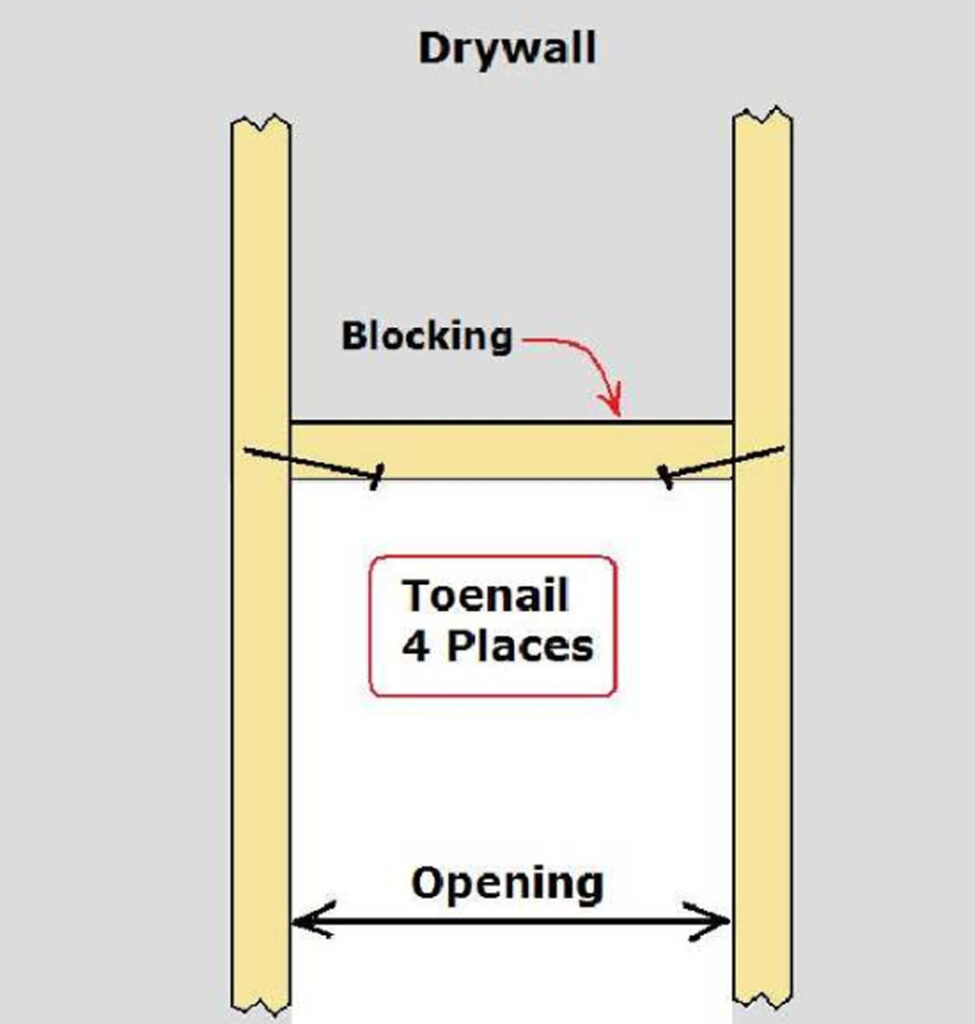
This is the short pieces of lumber in wood framed construction used for things like filling, spacing, joining, and reinforcing members.
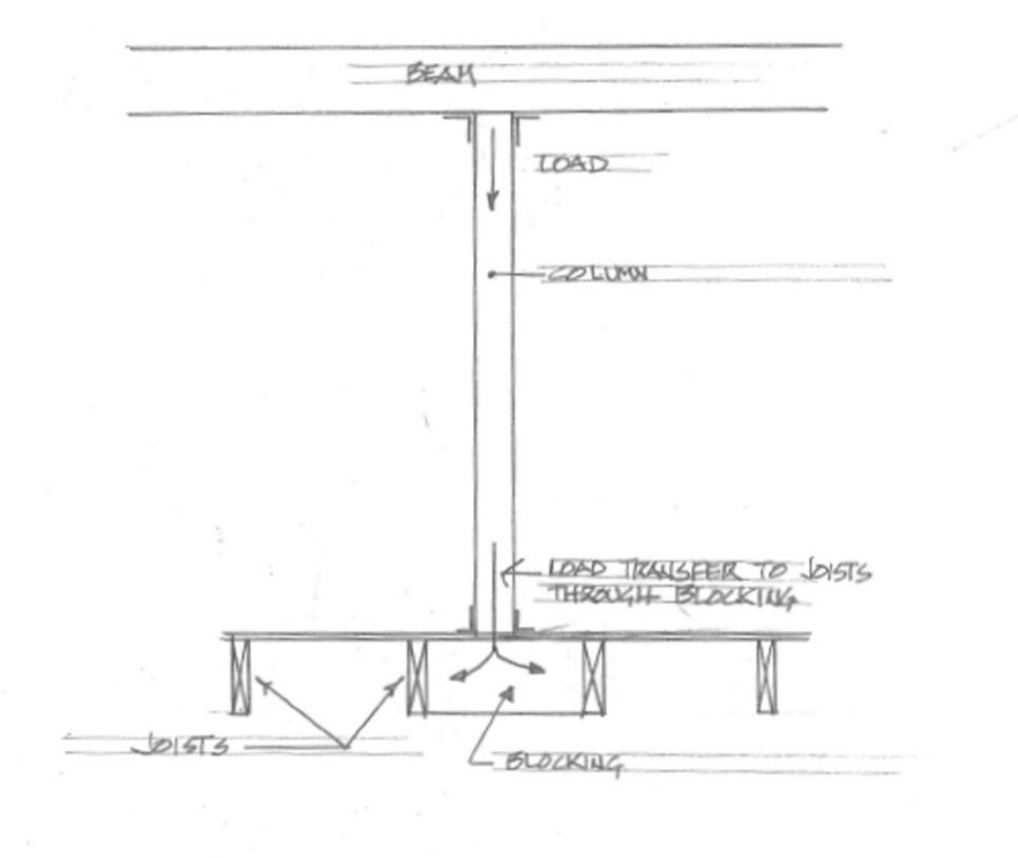
In this example (photograph beneath), blocking is used for continuous path of load downward to the foundation. Correctly transferring loads is essential to the health of your home.
Slab Strength/Footings
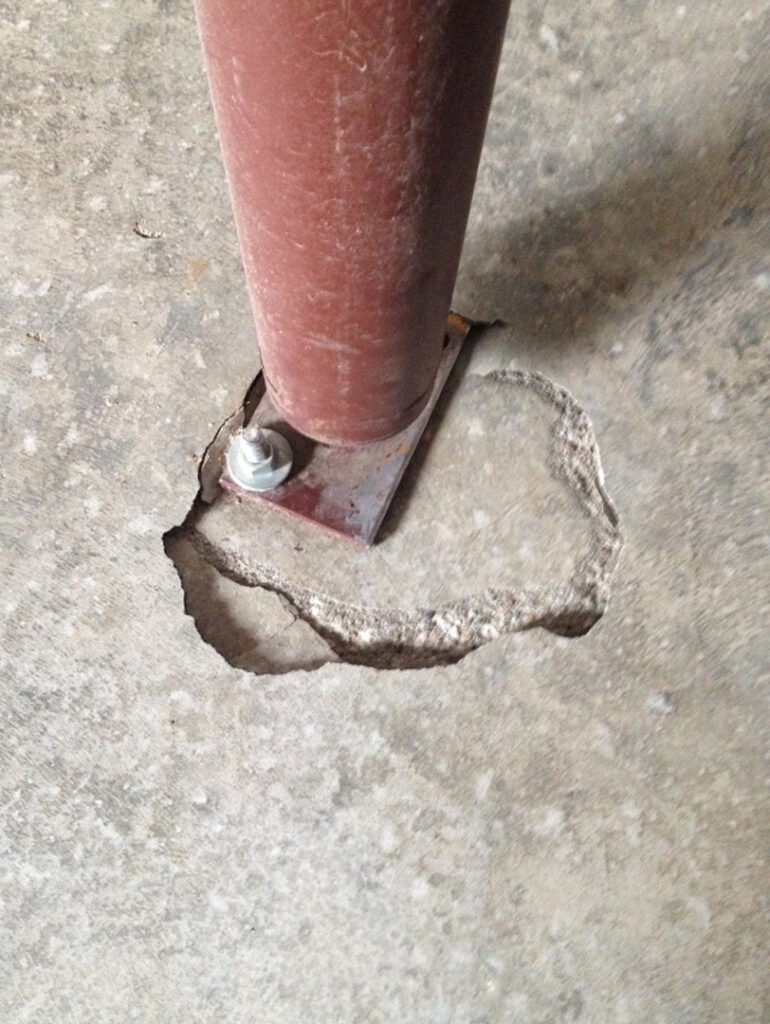
Frequently, a structural engineer will examine the strength of your slab (common type of foundation formed from a cake of concrete) when preparing to engineer a new structural system to supersede a load bearing wall.
If the wall y'all are removing is resisting uplift, then a basis may be required.
If you are only dealing with gravity loads then the slab strength will need to exist examined.
If it is stiff plenty to hold the footprint of the mail service, no footing volition be required. If not, so you will need to cut out a section of the slab, dig down into the soil and install a properly sized footing.
Looks scary? Removal of some of these load bearing walls can be very tricky and the structural engineer volition need to go through various calculations and the factors above to engineer the best possible replacement support structure.
Click hither to learn more most potential options for removing a load bearing wall.
Summary of how to determine if a wall is load bearing:
- Inspect your home using our guide to help y'all codify questions for a structural engineer
- Hire a structural engineer to inspect the desired walls, determine load bearing walls, and provide you lot with a scope of work that your contractor can use to perform the work SAFELY
- Obtain a building permit using paperwork from the structural engineer
- Give the contractor the greenlight to start the work and accept them follow the structural engineer's scope of work!
richardsonelies1942.blogspot.com
Source: https://cbsmn.com/how-to-determine-if-a-wall-is-load-bearing/
0 Response to "How Do You Know if It's a Load Bearing Wall"
Post a Comment